Direct answer
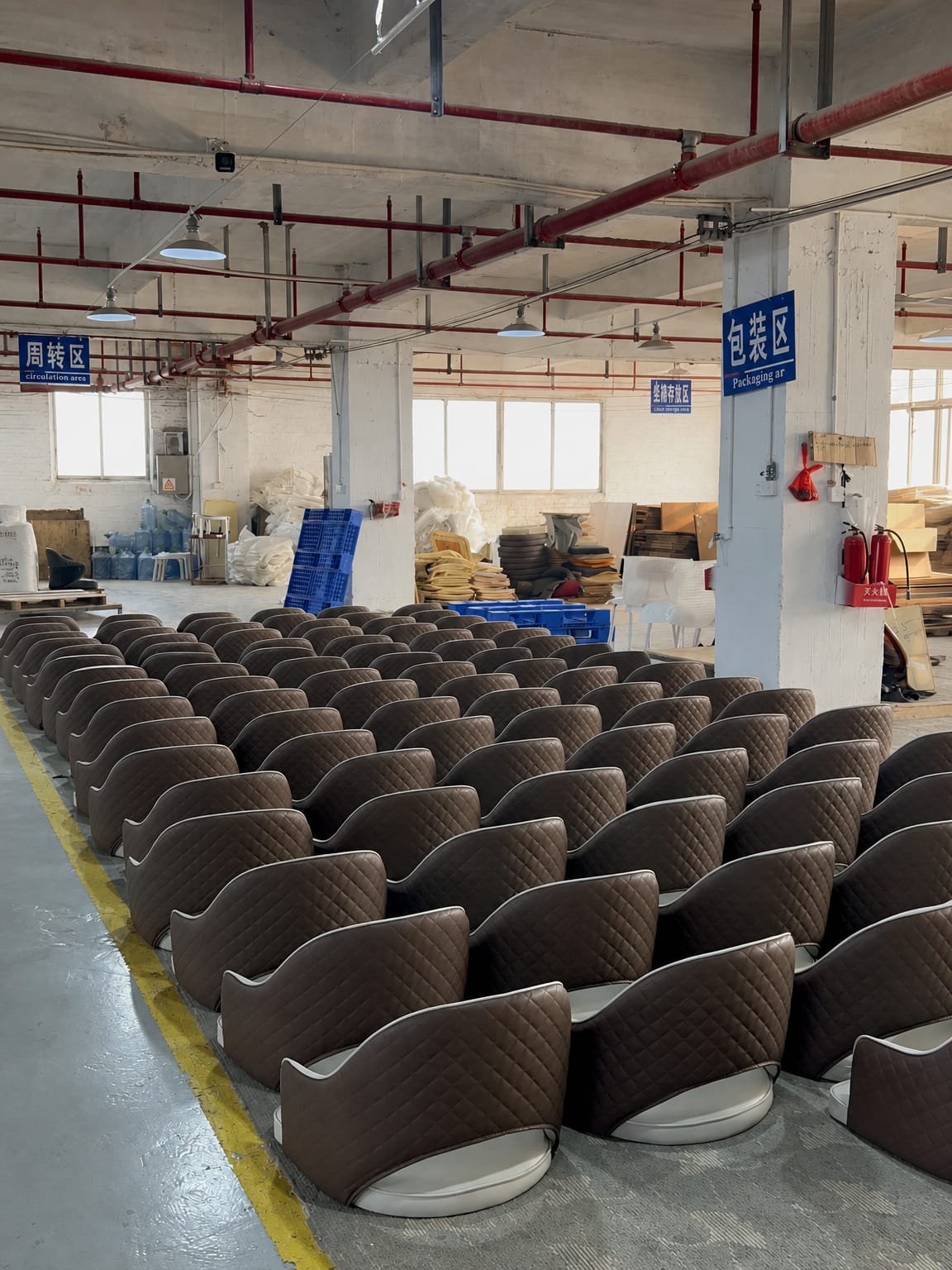
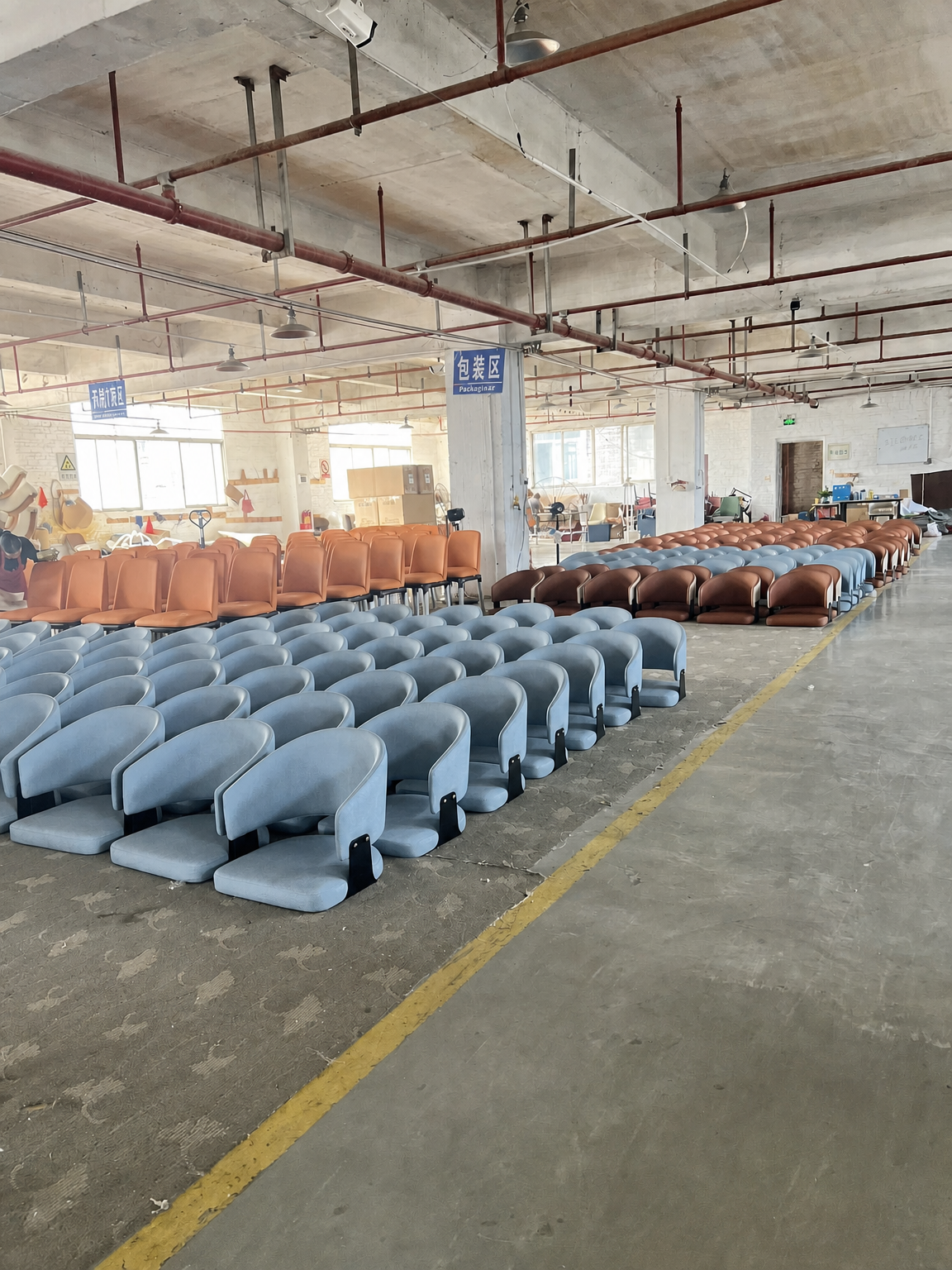
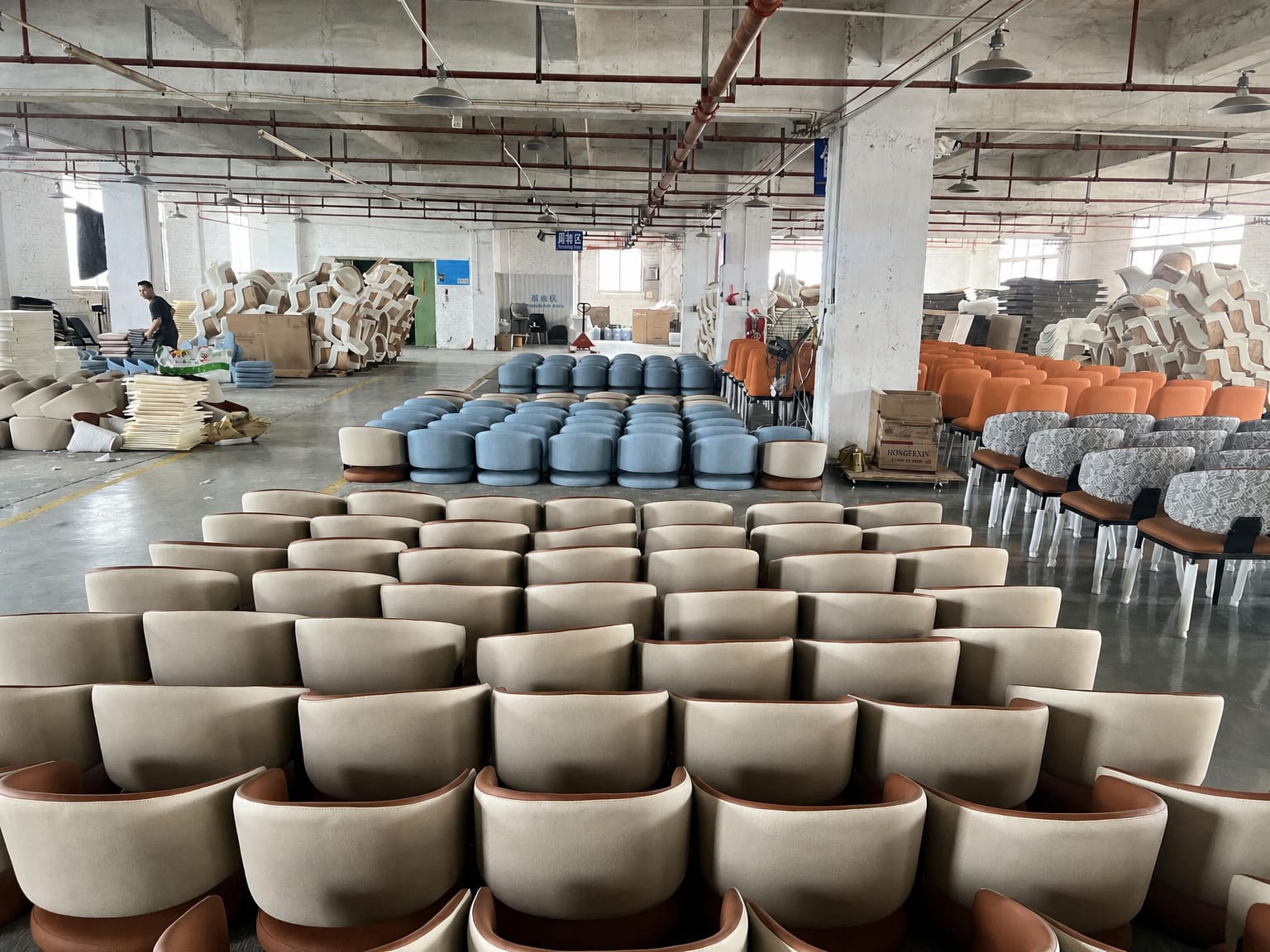
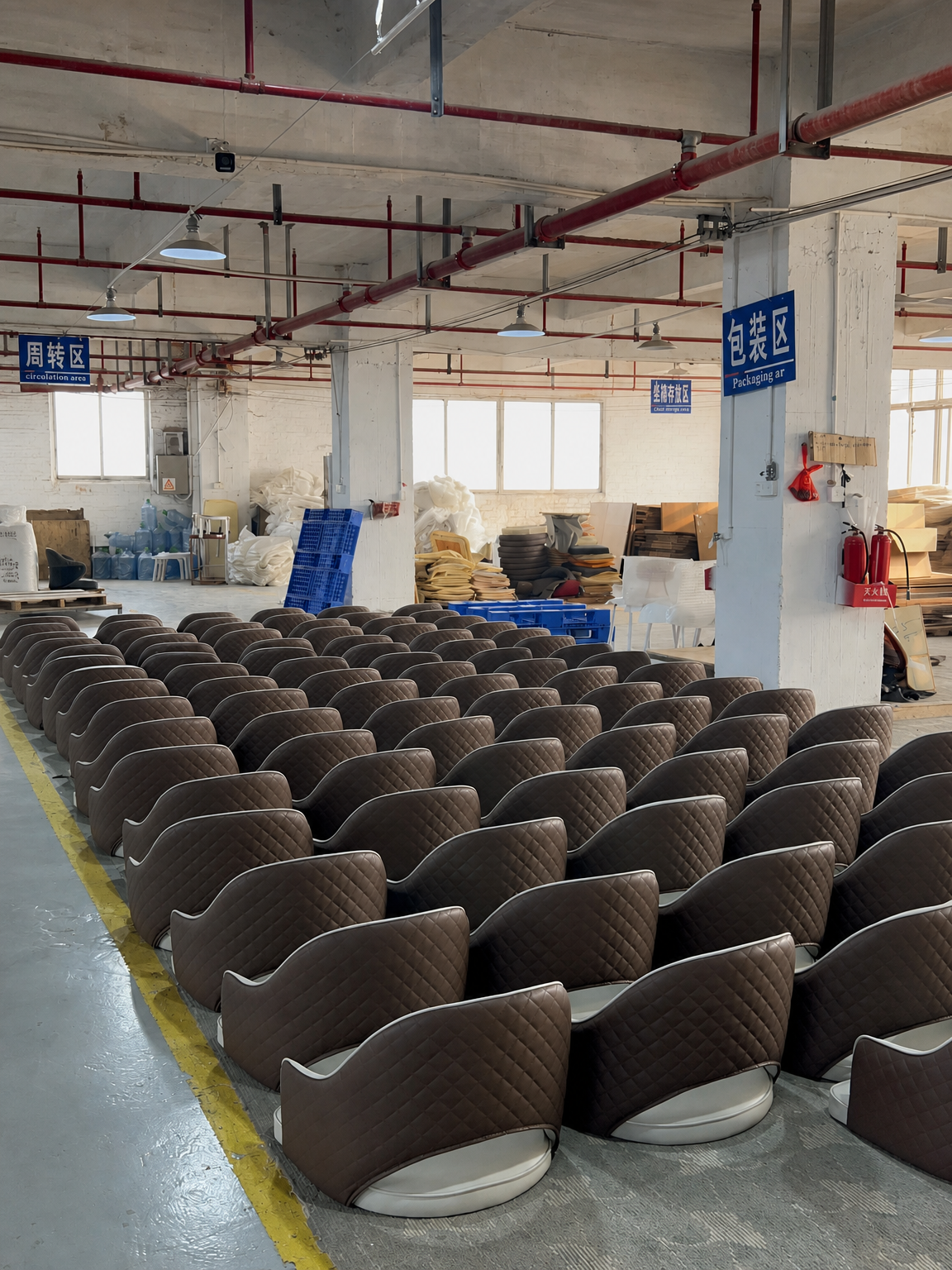
As the furniture industry enters a busy hospitality season, the workshop floor becomes a useful place to see what project readiness really looks like. Today's production run shows rows of upholstered dining chairs in soft grey, warm beige, cognac, quilted brown, powder blue and floral upholstery directions.
These chairs are intended for the type of environments where furniture needs to do more than fill a room: hotel dining areas, cafés, restaurants, private clubs, lounges and other commercial spaces where appearance, comfort and repeatability need to work together.
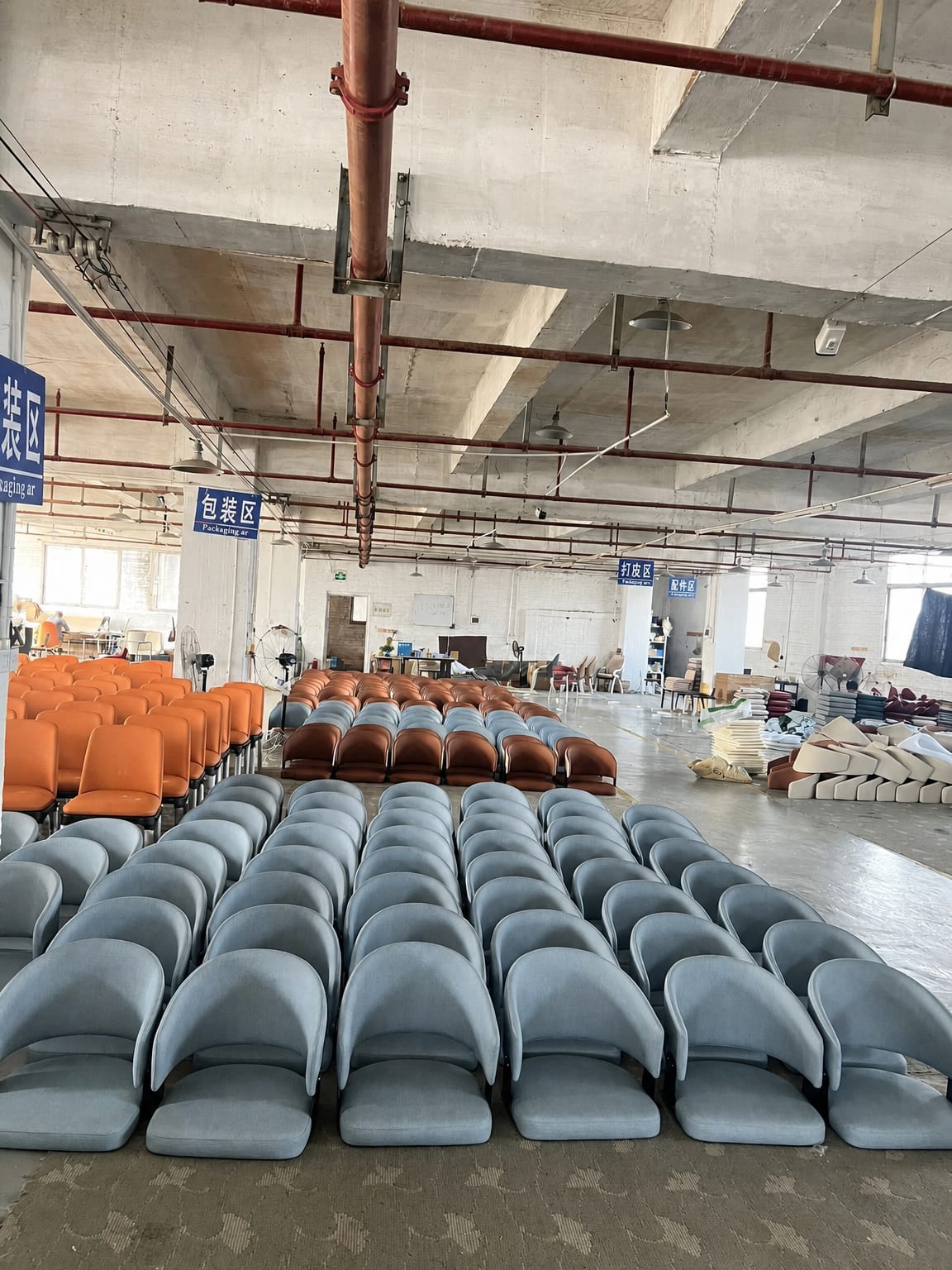
A real workshop-floor view of coordinated hospitality seating in production-ready colour directions.
What does the workshop floor reveal about this chair project?
The wide factory views show different chair forms and upholstery directions arranged in production areas. This does not replace a formal inspection record, but it provides a truthful view of how a multi-style hospitality order is organised before packing and delivery.
How do colourways support hotel and café interior concepts?
Colour is one of the quickest ways to connect a dining chair to a hospitality brand language. It also needs to work with the room's lighting, tables, flooring, walls and circulation environment.
| Colour direction | Possible interior role | What the project team should confirm |
|---|---|---|
| Soft grey | A quiet, contemporary and adaptable dining atmosphere | Whether the upholstery remains sufficiently distinct under the room's lighting. |
| Warm beige | A calm, refined palette for hotels, restaurants and lounge dining | Colour coordination with stone, timber, carpet and table finishes. |
| Cognac and brown | Warmth, depth and a more grounded visual identity | Approved colour reference, sheen, stitching and cleaning expectations. |
| Powder blue | A lighter, more relaxed direction for cafés and contemporary interiors | How the colour works with the brand palette and adjacent upholstery. |
| Floral upholstery | A distinctive statement for a themed café, restaurant or hospitality zone | Pattern direction, repeat, placement and consistency between samples and production. |
What should a designer or buyer include in the project brief?
A clear brief helps the design, procurement and production teams work from one shared definition of the chair. It also makes supplier quotations easier to compare.
Why does repeatability matter in hospitality furniture?
Hotels, cafés and restaurant groups often need multiple chairs that look consistent across a room, a floor or several sites. A chair that looks right in a single image still needs to be repeated through an approved reference, material direction and quality-control process.
Repeatability is easier to manage when the project keeps five records aligned: the drawing or reference, the approved sample, the quotation line, the quantity schedule and the inspection standard. When one of these changes, the revision should be recorded before production continues.
This approach is especially useful when a project combines several colours. The order may use the same chair family across a site while assigning different upholstery directions to different rooms or zones. The result is more coordinated than choosing unrelated chairs from different sources.
What should be checked before packing and delivery?
- Compare the finished chair against the approved reference and sample.
- Check the upholstery colour, pattern direction, stitching and visible finish.
- Review quantities by colourway, room or project location.
- Confirm that the packing method matches the chair form and delivery route.
- Keep inspection photos and approval records with the shipment documentation.
- Confirm the delivery sequence with the project team before dispatch.
Final specifications, performance requirements, delivery timing and inspection standards should always be confirmed for the individual project. The factory-floor images show the real production context; they are not a substitute for the approved technical brief.
How can Momoda support a hospitality seating brief?
Momoda Furniture supports international designers, hotel buyers, café operators, restaurant developers and furniture distributors with custom furniture discussions from Foshan, China. For a dining chair project, the working conversation can begin with the reference image, drawing, quantity schedule, colour direction and target delivery requirements.
The objective is straightforward: connect the desired visual direction to a production brief that can be reviewed, sampled, inspected, packed and delivered with fewer avoidable revisions.
Frequently asked questions
What information should I provide when sourcing custom dining chairs for a hotel or café project?
Provide a chair reference or drawing, quantity by room or site, preferred upholstery and colour direction, table or room information, project location and target delivery requirements.
Can custom dining chairs be produced in several colourways for one hospitality project?
A project may include several colourways or upholstery directions, subject to the approved reference, material availability, sample approval and the manufacturer's production review.
What should hospitality buyers check before approving a dining chair sample?
Review the overall silhouette, dimensions, seat and back comfort, upholstery appearance, stitching, colour under the intended lighting, finish details, stability and the approved project reference.
Why is a quantity schedule important for hotel and café furniture?
A room-by-room or site-by-site quantity schedule helps coordinate production, colourways, packing, inspection records and delivery sequencing.
Can a furniture manufacturer review a hotel or café chair brief before quotation?
A manufacturer can review the supplied reference, drawings, quantities, colour direction and delivery requirements to clarify the production brief before quotation and sampling.
Planning a hotel, café or restaurant project?
Send Momoda Furniture your chair reference, quantity schedule, preferred upholstery direction and target delivery requirements. We can review the brief and discuss a suitable custom dining chair solution for your hospitality space.
This case study uses real workshop-floor photographs supplied for the project. Product specifications, quantities, certifications, performance ratings and delivery dates are not stated unless confirmed in the individual project brief.